
Key Takeaways
-
Load capacity is a foundational aspect; selecting the right capacity prevents failures and accidents.
-
A regular cleaning, inspection, and lubrication routine maximizes caster lifespan.
-
The material of the caster wheel affects maneuverability, floor safety, and durability.
-
Correct wheel alignment and routine checks ensure safe, smooth performance.
Casters play a crucial role across countless industries, streamlining the mobility of equipment, carts, and furniture of all shapes and sizes. Selecting the correct casters enhances safety, protects valuable flooring, and extends the life of your gear. Proper upkeep is just as important, as neglected casters can reduce productivity and create safety hazards. Whether you are purchasing new casters or optimizing your current setup, understanding the right approach to selection and maintenance yields long-term rewards for any workspace. Integrating the right rigid casters can vastly improve the stability and movement of your equipment, ensuring that each application meets operational needs and safety standards.
Investing time in choosing suitable casters and adhering to consistent maintenance practices ultimately minimizes downtime and repair costs. With so many caster options available, being informed helps you avoid common pitfalls such as excessive floor wear, unexpected equipment failure, or workplace injuries.
Understanding Load Capacity
The first step in selecting a caster is identifying the load capacity required for your application. Overloading casters can severely damage wheels and equipment and pose significant safety hazards to workers. To calculate the optimal load capacity, add the equipment’s weight and its anticipated maximum load, then divide by the number of casters. It is best practice to choose casters rated 25 to 30 percent higher than your load calculation, which ensures stability even if the weight distribution shifts or additional force is applied. For example, if a cart plus load totals 600 pounds and rests on four casters, each should be rated for at least 200 pounds for added safety.
Regular Maintenance Practices
Keeping casters in prime condition requires a regular maintenance schedule. Start with cleaning, which should occur weekly for high-use applications. Use a soft brush or cloth to remove dirt and debris, and a mild soap for persistent grime. After cleaning, always ensure casters are thoroughly dried to prevent corrosion, especially on metal components. Monthly inspections for chips, cracks, or loose nuts and bolts help you address small issues before they become larger problems. Lubrication is another essential task. Apply a light oil or silicone-based lubricant to the bearings and swivel joints every three to six months. Take care not to over-lubricate, as excessive grease can attract dirt and accelerate wear.
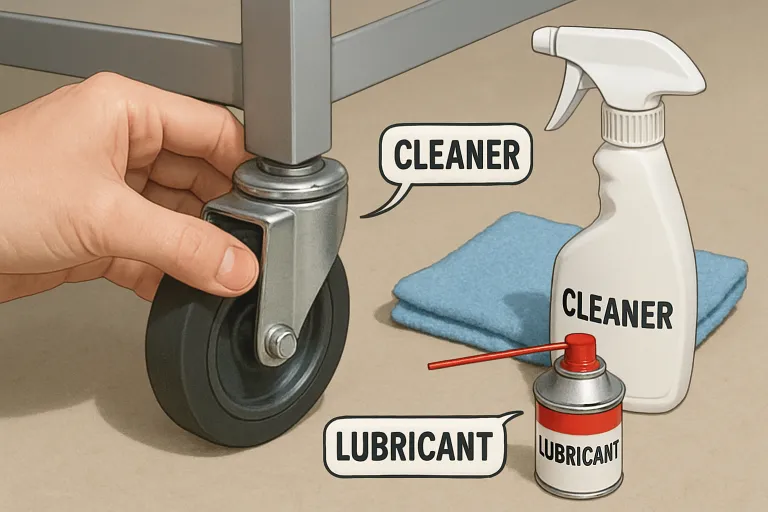
Making inspections and lubrication a part of standard operating procedures can significantly extend caster life, ensuring equipment remains safe and easy to move.
Choosing the Right Wheel Material
The right wheel material makes a dramatic difference in maneuverability, durability, and floor protection. Polyurethane wheels are excellent for a wide range of indoor applications, balancing long-lasting durability with gentle floor contact. These wheels minimize markings and reduce noise. Steel wheels, conversely, offer superior strength and longevity for heavy-duty projects, especially in manufacturing or warehouse settings. However, steel wheels can damage sensitive flooring and may be noisy on hard surfaces. Nylon wheels are an ideal solution for wet or chemically harsh environments, such as labs or industrial kitchens, as they resist corrosion and many solvents.
Evaluating the surface, use case, and environment helps determine which material suits your specific operational needs. In facilities where casters will encounter a variety of chemicals or water, wheel material is a primary consideration for preventing breakdowns and ensuring continued performance.
Importance of Wheel Alignment
Wheel alignment is often an overlooked factor that profoundly affects caster functionality. Incorrectly aligned wheels do not track in a straight line, making equipment harder to steer and increasing wear on both wheels and floors. Regularly assess alignment by observing caster movement on a level surface and correcting any deviation from straight-line travel. Re-aligning or replacing misaligned casters maintains mobility and reduces unnecessary strain on the caster framework and bearings. Proper alignment directly translates into less operator effort and extends the life of all caster components.
Ergonomics and Operator Safety
High-quality casters deliver significant ergonomic benefits, which directly influence employee well-being and productivity. Reduced resistance and improved maneuverability mean operators require less physical effort, lowering the risk of repetitive strain or acute injuries. Features such as precision ball bearings and locking swivels can make heavy loads easier to guide and secure, especially on sloped or uneven surfaces. By selecting ergonomic caster designs, companies not only promote safety but also demonstrate commitment to workforce health, a priority recognized by safety organizations worldwide.
Environmental Considerations
Caster performance and longevity are affected by the environment where they are deployed. Consider temperature fluctuations, exposure to moisture, and the presence of corrosive chemicals when selecting casters. Stainless steel components and UV-resistant polyurethane wheels are ideal for challenging environments, offering resistance to rust, corrosion, and wear from frequent sanitation or harsh cleaning agents. Select casters designed to handle the specific demands of your workspace—whether that means food service, healthcare, laboratory, or outdoor use. Adaptable caster systems ensure you maintain equipment mobility even in the toughest scenarios, and investing in higher-grade materials pays off in reduced replacement frequency and ongoing performance.
Customization and Specialized Features
Different industries and tasks often require unique caster configurations. Customizable features include mounting options, wheel diameter, brake types, tread materials, and corrosion-resistant coatings. Some casters offer directional locking, which allows a single wheel to be locked in place or to pivot, improving steering precision in tight areas. Swivel restrictors and special brake mechanisms add another layer of safety and control. Medical carts, laboratory equipment, and warehouse trolleys all benefit from choosing casters tailored to their environment and use patterns. Consult manufacturers or industrial supply experts to identify which specialized features add the most value to your operational needs.
Final Thoughts
Integrating best practices into every phase of caster selection and maintenance ensures that your equipment remains mobile, safe, and operationally efficient. From understanding load and material requirements to implementing consistent preventive care, the right casters will serve your workplace reliably and for extended periods. With proper planning, environmental consideration, and occasional customization, your investment in casters can provide years of uninterrupted, smooth performance.