
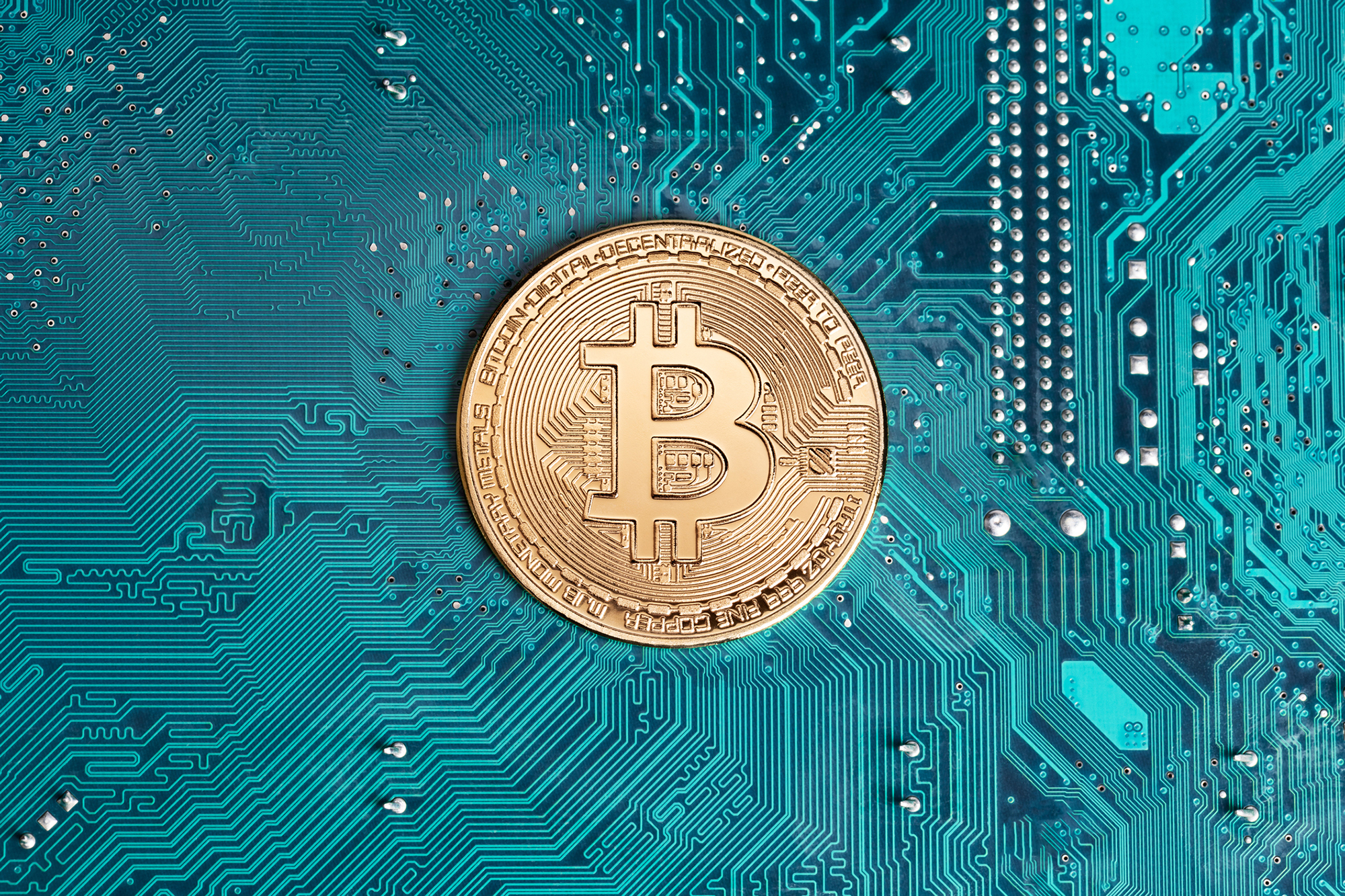
What is Bitcoin, exactly? How does it work, and why is it regarded as a revolutionary financial innovation? By exploring its fundamental ideas, distinctive design, and wide range of applications, this site seeks to demystify Bitcoin. This in-depth book will bring you insights into the world of Bitcoin, revealing its potential to revolutionize personal finance management and beyond, whether you are a seasoned financial expert or a curious enthusiast.
Since its creation in 2009 by the enigmatic figure known only as Satoshi Nakamoto, Bitcoin has piqued the interest and imagination of engineers, economists, and members of the general public. Its foundational technology, blockchain, has gained popularity as a term that predicts a new era of openness, security, and decentralization.
Within the intricate nexus of technology and finance, Bitcoin emerges as a topic of interest and controversy. In today’s world, it holds a special place that is neither totally alien to digital entrepreneurs nor fully accepted by established financial systems. As a digital asset, Bitcoin is not a financial revolution advocate or a passing fad; rather, it is a subtle evolution in how we think about money, data, and online interactions.
Let us examine its underlying technology, possible uses, and position within the larger financial system. from its social ramifications to its technological design.
Bitcoin: Beyond Currency Boundaries
Bitcoin is defined as a distributed public data management system.
Bitcoin differs from conventional currencies due to its decentralized nature. It runs on a peer-to-peer network in which transactions are recorded on a blockchain, a public ledger, and validated by network nodes using encryption. Financial relations can become more transparent and democratic as a result of this system’s elimination of the necessity for central banks or single administrators. This innovative method has the power to completely alter the way we see finance and money.
Blockchain Technology: Establishing Transparency and Trust
Bitcoin is built on blockchain technology. It is a distributed ledger that keeps track of every transaction made across a computer network. This guarantees that the data is open to all users and uncontrolled by a single party. Because the information on the blockchain is unchangeable, it offers a reliable and secure record of transactions. Beyond Bitcoin, this technology has a wide range of uses in supply chain management, healthcare, and other fields.
Bitcoin as a Monetary Token: Monetizing the Digital World
The way that Bitcoin is monetizing the digital world is revolutionary. It makes it possible to develop fresh financial services and products that make use of digital assets. Through its ability to tokenize physical assets and facilitate decentralized finance (DeFi), Bitcoin has created new opportunities for growth and innovation. This change has the potential to democratize finance by increasing accessibility and efficiency for all.
An Impenetrable Security Fortress: Distributed Server Model and Immutability
One important aspect of Bitcoin that guarantees data integrity is its immutability. A transaction cannot be changed or removed from the blockchain once it has been recorded there. This offers a high degree of security and confidence in the system, guarding against manipulation and fraud. This basic distinction between Bitcoin and conventional banking systems accounts for a large portion of its expanding user base.
Redefining Resilience with the Distributed Server Model
The network of Bitcoin is distributed, therefore there is not a single point of failure. Multiple nodes store data, resulting in a robust system that is resistant to failures and attacks. There is no comparable amount of security and dependability in conventional banking systems as this decentralized method offers. This paradigm has the power to fundamentally alter the way we consider security in the digital era.
Interoperability: Overcoming the Gap in Technology
The Internet of Things Link: A Flowing Integration Because of its emphasis on interoperability, Bitcoin is able to work with a wide range of technologies, including the Internet of Things (IoT). This makes it possible for platforms and devices to interact and exchange data, forming a cohesive and effective financial ecosystem. This is a big development that might completely change the way we use technology and handle our money.
Because of its emphasis on interoperability, Bitcoin is able to work with a wide range of technologies, including the Internet of Things (IoT). How does this integration function, though?
Smart Contracts: Bitcoin allows for automated agreements to self-execute when predetermined criteria are satisfied by utilizing smart contracts. IoT devices can benefit from this automation, which enables interaction and transaction without human intervention.
Decentralized Architecture: The distributed character of IoT and the decentralized nature of Bitcoin are complementary. Without a centralized authority, devices can communicate directly with one another, increasing efficiency and lowering the possibility of failure points.
Security Protocols: Secure data transmission and authentication can be ensured by applying Bitcoin’s strong security protocols to the Internet of Things. This gives the interactions between devices an extra degree of integrity and trust.
Microtransactions: Usually amounting to less than $1, microtransactions are little financial transactions. They are frequently utilized in online games where users can spend real money to buy in-game goods or currency. In the context of the Internet of Things (IoT), where gadgets are able to exchange regular, little payments with one another, microtransactions are also growing in popularity.
Standardization: Bitcoin guarantees seamless interaction between many devices and platforms by offering a uniform protocol for transactions. The establishment of a cohesive and effective financial ecosystem spanning multiple technologies is contingent upon this standardization.
Scalability: The network of Bitcoin is built to support a high volume of transactions, which makes it appropriate for the wide range of interactions that can take place in an Internet of Things ecosystem.
Transparency: All transactions may be clearly and verifiably recorded thanks to the transparent nature of the Bitcoin blockchain. By applying this openness to IoT, a clear audit trail and increased system trust can be achieved.
Through the smooth communication and transaction across devices and platforms, the integration of Bitcoin and IoT enables a unified and efficient financial ecosystem. It is a huge development that revolutionizes how we use technology and handle our finances by utilizing the advantages of both platforms.
The Revolution of Bitcoin
Bitcoin is a technical revolution with the potential to completely transform our financial system, not merely a digital currency. Decentralization, immutability, and interoperability are among of its distinctive qualities, which present previously unheard-of chances for financial innovation and growth. It is a system that gives people and companies more control and a more open and democratic approach to handle money. The Bitcoin revolution is just getting started, and it will probably have an ongoing effect on many other industries for years to come.
This blog seeks to provide readers a thorough grasp of Bitcoin’s potential and importance by exploring its many facets. Bitcoin is a new frontier in digital finance because of its inventive technology and revolutionary effect on the financial industry. It is a field that keeps developing and presents countless opportunities for research and development. Knowing Bitcoin is crucial to navigating the constantly shifting digital economy, regardless of experience level with investing or level of curiosity.