
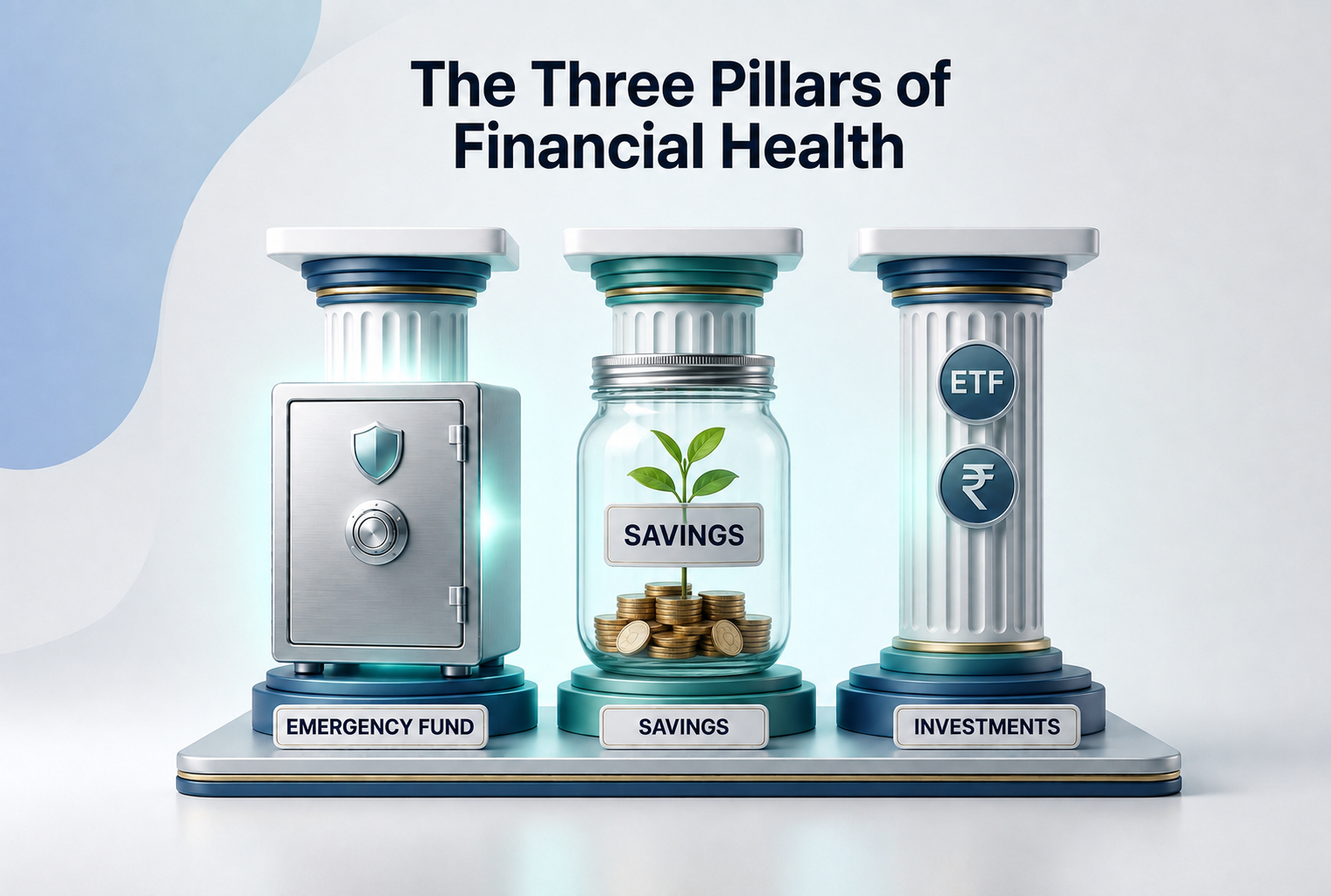
The Three Numbers That Define Your Financial Health
Why These Three Numbers Even Matter
Okay, so here’s the thing nobody tells you when you’re twenty-five and just started earning real money: nobody hands you a scorecard.
There’s no report card for adulting, no teacher circling stuff in red ink saying, “you’re doing great” or “hey, you’re about to mess this up.” You’re just… out there. Guessing.
And that’s exactly why a financial health check matters so much, because without one, you’re basically flying blind, hoping things work out because they usually do, right? Except they don’t always.
I learned that the hard way, and honestly, so did most people I know.
The Number Everyone Ignores First
Let’s start with savings rate, because honestly, it’s the one people skip over the fastest.
Everyone wants to talk about investing, about stocks doing wild things, about crypto swings that make your stomach drop.
Nobody wants to talk about boring stuff. But your savings rate, meaning the percentage of income you actually keep rather than spending, is arguably the single biggest lever you control.
Not your salary. Not the market. Your savings rate. I remember sitting down one weekend, coffee going cold beside my laptop, running numbers and realizing I was saving like four percent.
Four percent! I thought I was doing fine because my bank account never hit zero. Turns out that’s a pretty low bar.
A proper financial health check would’ve caught that years earlier, but who does that stuff voluntarily when everything feels okay on the surface?
Emergency Fund, Or That Cushion You Keep Postponing
Now here’s the part where I get a little preachy, so bear with me.
Emergency funds are the most talked about, least actually funded things in personal finance.
Everyone knows they should have three to six months of expenses tucked away somewhere boring and liquid. Everyone nodded along. Almost nobody does it.
Why? Because it feels like money just sitting there doing nothing, and our brains hate that.
We want our money to work, hustling, and grow. Sitting in a savings account earning barely anything feels like a waste, even though that’s precisely the point.
Think of it like a spare tire. You don’t drive around admiring your spare tire, you don’t brag about it at parties, but the one time you get a flat on a highway at midnight, oh man, are you glad it’s there.
That’s your emergency fund. It’s not there to impress anyone. It’s there, so a broken transmission or a sudden layoff doesn’t turn into a full-blown crisis where you’re maxing out credit cards just to eat.
I’ve seen friends without one spiral fast when something unexpected hit, and it wasn’t pretty. Watching that happen changes how seriously you take this stuff.
Investment Mix, Where People Get Weirdly Emotional
Alright, moving on to investment mix, which is where things get spicy, oddly enough.
You’d think allocating money across stocks, bonds, real estate, whatever, would be a purely mathematical exercise.
Nope. It’s emotional as anything.
People chase whatever’s hot. They panic sell when markets dip.
They put everything into one stock because their cousin’s friend made a fortune on it once.
Sounds familiar? I bet it does, because we’ve all either done it or watched someone, we love to do it.
Your investment mix should reflect your actual goals and timeline, not whatever’s trending on social media this week. If you’re twenty-eight and investing for retirement decades away, a portfolio leaning heavier into growth assets makes sense.
If you’re fifty-eight and planning to retire soon, that same aggressive mix could wreck you if markets tumble right before you need the money.
There’s no single correct answer here, which is honestly frustrating for people who want a clean formula. Life doesn’t hand out clean formulas though, does it?
How These Three Actually Talk to Each Other
Here’s where it gets interesting, and this is the part most articles skip entirely. These three numbers aren’t separate boxes you check off independently. They’re connected
A weak savings rate means a slower built emergency fund, which means you’re more vulnerable to shocks, which means you might have to sell investments at the worst possible moment just to cover a surprise expense.
See how that domino effect works? One weak link and the whole chain wobbles.
I had a stretch a few years back where my savings rate was decent, actually pretty solid, but my emergency fund was thin because I’d been aggressively investing instead.
Then my car died. Literally died, engine seized, the whole dramatic thing.
I had to pull from investments during a rough market patch just to buy a replacement.
Lost money I didn’t need to lose, all because my three numbers weren’t balanced against each other. That stung. Genuinely stung.
Running Your Own Numbers Without Overthinking It
So how do you actually check where you stand? You don’t need a financial advisor for this, though talking to one certainly helps if things feel complicated.
Grab your last few months of bank statements. Figure out roughly what percentage of your income you’re actually keeping versus spending. Look at your emergency fund and ask honestly, could this survive three months without income?
Then glance at your investments and ask whether the mix still fits where you are in life right now, not where you were five years ago when you set it up and forgot about it.
Now, here’s the thing; this isn’t a one-time exercise. Life shifts. Jobs change, families grow, priorities flip upside down overnight sometimes.
What worked at twenty-five won’t necessarily work at thirty-five.
That’s why revisiting these numbers regularly matters more than getting them perfect once and walking away satisfied.
The Trap of Comparing Yourself to Everyone Else
One thing that trips people up constantly, and I mean constantly, is comparison.
Scrolling online, seeing someone flex about their portfolio returns or their six-figure emergency fund, it messes with your head.
But context matters enormously. Someone with no kids, no debt, and a huge salary is playing an entirely different game than someone supporting a family on a modest income.
Comparing your three numbers to a stranger’s reel is basically pointless, maybe even harmful if it pushes you toward reckless decisions just to keep up.
Focus inward instead. Where were you a year ago? Where are you now? That trajectory tells you far more than any comparison ever could.
Small Moves That Actually Shift the Needle
You don’t need a dramatic overhaul to improve these numbers.
Small consistent moves beat sporadic heroic efforts almost every time. Bump your savings rate by even two percent this year.
Automate a tiny transfer into your emergency fund every payday, so you’re not relying on willpower, which, let’s be honest, is unreliable at best.
Rebalance your investment mix once a year, maybe twice, instead of obsessively checking it daily like it’s a group chat.
Bringing It All Together, Finally
At the end of the day, running a financial health check isn’t about achieving some mythical perfect state where everything’s balanced flawlessly forever.
That doesn’t exist. Life gets messy, markets wobble; cars break down at the worst possible times.
What matters is knowing your three numbers, savings rate, emergency fund, investment mix, and actually paying attention to how they shift over time instead of ignoring them until a crisis forces your hand.
Honestly, doing your own financial health check doesn’t require perfection, just honesty. Sit with your numbers occasionally, adjust when life demands it, and stop comparing your chapter one to someone else’s chapter twenty.
That’s really all there is to it, coffee getting cold beside you and all.