
Key Takeaways
-
Hightech Signs provides commercial signage solutions for businesses and organizations in Austin and Central Texas.
-
A coordinated sign system can improve property identification, visitor navigation, brand consistency, and the overall customer experience.
-
Effective sign planning considers viewing distance, contrast, placement, lighting, materials, accessibility needs, and local permit requirements.
-
Projects can range from a single lobby sign to a complete package of exterior signs, vehicle graphics, ADA signs, and wayfinding.
How Can Hightech Signs Help An Austin Business That Is Hard To Find?
A business can offer excellent products or services and still lose opportunities when customers cannot quickly spot the building, identify the correct entrance, or navigate the property. Hightech Signs helps address those problems with custom exterior signs, interior branding, vehicle graphics, ADA signage, and wayfinding systems designed around the location and the visitor journey.
For companies starting a signs Austin TX project, the goal should be more than adding a logo to a wall. The right solution helps people recognize the business from the street, find parking or an entry point, understand where to go next, and arrive with greater confidence.
Hightech Signs describes itself as a full-service, woman-owned, and Texas HUB-certified sign company established in 1990. Its process can include project planning, design, fabrication, permitting support, and professional installation, giving clients a more coordinated path from an initial idea to a completed sign package.
Why Does Business Signage Matter For Austin Companies?
Signage is a physical part of a brand and a practical communication tool. A visible monument sign may help drivers identify a property, while an organized lobby sign can set a professional tone after visitors enter. Directional signs, suite numbers, room identification, and parking guidance reduce unnecessary confusion throughout the rest of the visit.
A sign that looks polished in a digital proof may not work as well in its actual environment. Traffic speed, viewing angle, landscaping, competing signs, sunlight, nighttime conditions, and the amount of copy all affect whether people can notice and understand it. Good signage balances appearance with usability.
What Types Of Signs Does Hightech Signs Design And Install?
Different properties need different forms of visual communication. Hightech Signs can help match the sign format to the business objective, including:
-
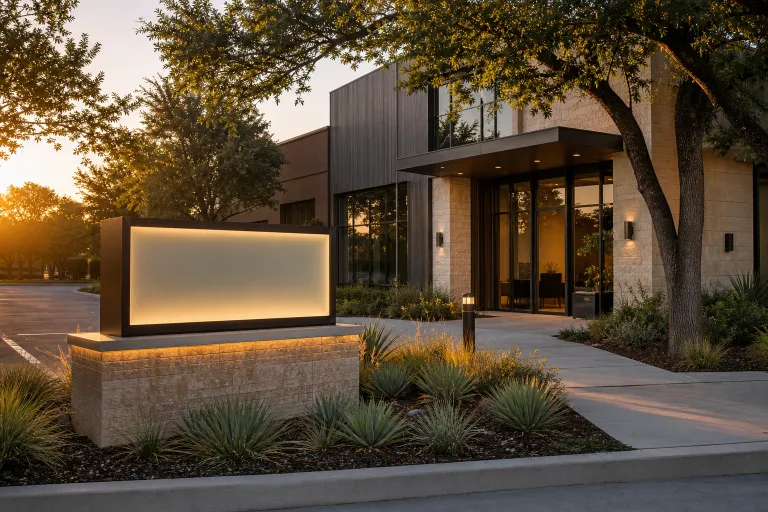
Monument signs: Permanent roadside identification for offices, campuses, commercial developments, and multi-tenant properties.
-
Corporate lobby signs: Dimensional letters, acrylic panels, metal finishes, illuminated elements, and other reception-area branding.
-
Vehicle graphics and wraps: Branded graphics that carry a company identity onto service vehicles, delivery vehicles, and fleets.
-
ADA signs: Room identification and accessibility-related signage for workplaces, schools, healthcare settings, and commercial facilities.
-
Wayfinding signs: Directional systems for parking areas, campuses, offices, medical facilities, apartments, and retail centers.
-
MDO and site signs: Durable post-and-panel signs for development, construction, real estate, leasing, and directional needs.
-
Wall graphics and murals: Interior graphics that reinforce brand colors, culture, messaging, and visual interest.
How Does Hightech Signs Improve Visibility And Readability?
Planning starts with how and where a sign will be used. A roadside sign for drivers needs a different design approach than a hallway directory viewed at close range. Hightech Signs can evaluate the intended audience, site conditions, brand standards, and function before production begins.
Important Design Considerations
-
Expected viewing distance and whether people are walking or driving.
-
Letter size, contrast, message length, and visual hierarchy.
-
Sign height, mounting method, and angle of approach.
-
Lighting needs and visibility after dark.
-
Exposure to heat, sunlight, wind, and rain.
-
Nearby buildings, landscaping, and competing visual clutter.
For example, a medical office may need several connected elements rather than one oversized logo sign: exterior identification, parking directions, a suite marker, a lobby directory, accessible room signs, and clear interior directional messages. Together, those pieces create a smoother path for patients and guests.
Can Hightech Signs Support Consistent Business Branding?
Yes. A coordinated program can carry the same logo proportions, colors, typography, materials, illumination style, icons, and tone across exterior and interior touchpoints. This helps a company present a more cohesive identity across the monument sign or storefront, the lobby, office doors, fleet vehicles, and wall graphics.
That consistency is useful for a single location and can be especially valuable for organizations with multiple properties, departments, or vehicles. Hightech Signs can support both focused projects and broader commercial branding programs built around an established visual identity.
What Does The Sign Project Process Look Like?
-
Consultation: Review the property, objectives, sign type, audience, timeline, and available brand assets.
-
Concept development: Create a design direction that fits the building, message, and customer experience.
-
Site and code review: Consider installation conditions, landlord requirements, structural needs, and applicable regulations.
-
Permitting support: Prepare for the approval process when a permit is required.
-
Fabrication and installation: Produce approved components and install them at the property.
-
Final review: Confirm alignment, appearance, usability, and overall presentation.
How Does Austin Sign Permitting Affect A Project?
Permitting should be considered before fabrication, not after a sign has been designed or purchased. The City of Austin states that outdoor signage generally requires a sign permit, although some signs may be exempt. Its sign permit requirements explain sign districts, application steps, and submission requirements for sign types such as wall, awning, freestanding, roof, and projecting signs.
Requirements can involve property approval, dimensions, placement, attachment details, structural drawings, and electrical permitting for illuminated signs. Hightech Signs can guide clients through project planning and permit-related preparation, while final approval remains with the appropriate City of Austin authority.
Which Businesses Can Benefit From A Custom Sign System?
Corporate offices often need lobby branding, suite identification, and visitor directories. Healthcare facilities can benefit from clear signage for parking, entrances, departments, and rooms. Retailers and restaurants may prioritize storefront visibility, window graphics, menus, and directional messages. Schools, apartment communities, industrial properties, construction projects, commercial developments, and government facilities may require broader wayfinding systems that organize larger or more complex environments.
Accessibility should be part of the conversation early in the process. The ADA sign guidance explains that, when provided, signs identifying permanent rooms and spaces may have specific visual and tactile requirements. A thoughtful plan helps align room signs and wayfinding with the facility’s needs.
What Should A Business Prepare Before Contacting Hightech Signs?
-
The business name, physical address, and project goals.
-
Photos of the storefront, building, entrance, parking area, or vehicles.
-
Approximate dimensions and preferred sign locations.
-
Logo files, brand guidelines, colors, and typography details.
-
Desired materials, lighting preferences, and target installation date.
-
Landlord, property management, or known permitting information.
-
Examples of signs the business likes and a budget range, if available.
Conclusion
A well-planned signage system can help Austin businesses become easier to find, navigate, and recognize. By combining clear design, consistent branding, accessible features, durable materials, and proper permitting, businesses can create signs that support both visitors and daily operations. Careful planning also helps ensure each sign fits the property, purpose, and long-term needs.