
Key Takeaways
-
Small, repeatable daily habits are the foundation of family oral health.
-
Brush twice daily with fluoride toothpaste and clean between teeth once daily.
-
Children need age-appropriate toothpaste amounts and hands-on supervision.
-
Dental visits help identify decay, gum concerns, and damaged dental work early.
-
Pain, swelling, persistent bleeding, and loose adult teeth deserve prompt attention.
A practical oral health plan does not need to be complicated. It should make it easier for every person in the household to brush, clean between teeth, make thoughtful food choices, and seek care before a small issue becomes painful or expensive.
Families in Albuquerque looking for prevention guidance, routine exams, restorative care, and age-specific treatment can explore family dental care services Albuquerque, NM from Terry Gomez DDS. The practice provides general dentistry for children and adults in Albuquerque, with an emphasis on preventive care and patient education, making its website a useful local resource for families who want to make informed oral health decisions.
Why Every Family Needs a Simple Oral Health Plan
Oral health routines work best when they are built into ordinary life. A regular morning and bedtime schedule reduces reminders, negotiations, and missed brushing sessions. Prevention is usually easier than responding to toothaches, cavities, broken fillings, or gum inflammation after they develop. Home care is important, but it complements rather than replaces professional examinations.
Each family member may have different risks. Young children are learning techniques, teens may have braces, adults may deal with stress or dry mouth, and older adults may need to clean around bridges, implants, or dentures. A shared plan creates consistency while leaving room for individual needs.
Build a Daily Dental Routine That Works
Morning Care
Use a soft-bristled toothbrush and fluoride toothpaste for about two minutes. Angle the bristles gently toward the gumline and clean all tooth surfaces, including the backs of the front teeth. A gentle tongue cleaning may help remove buildup and freshen the mouth. When brushing after lunch is not realistic, drinking water can help rinse away food debris.
Evening Care
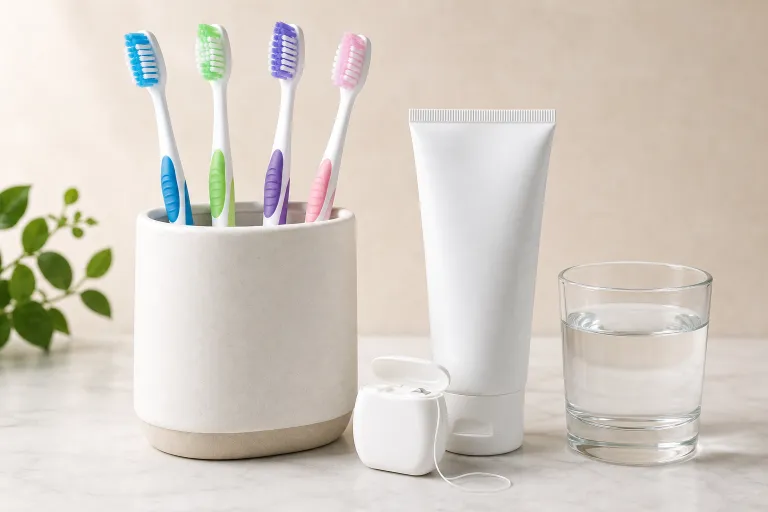
Clean between teeth once each day with floss, interdental brushes, or another tool recommended for the space between your teeth. Then brush before bed and, when possible, avoid additional snacks or sweet drinks afterward. The American Dental Association’s home oral care guidance supports brushing twice daily with fluoride toothpaste and daily cleaning between teeth. Store toothbrushes upright so they can air-dry, and replace them when bristles fray.
Adjust Care for Babies, Children, and Teens
Start cleaning a child’s mouth early and begin brushing when the first tooth appears. Use a small, soft brush designed for the child’s age. For children younger than three, use a rice-sized smear of fluoride toothpaste. Children ages three through six generally need only a pea-sized amount. The CDC’s fluoride information explains why fluoride is valuable for cavity prevention when used appropriately.
Adults should supervise until children can brush thoroughly and spit out excess toothpaste. For teens, make routines easy to maintain around busy school, work, and sports schedules. Mouthguards can protect teeth during contact sports, while braces and retainers need careful cleaning around wires, brackets, and edges.
Make Smarter Choices About Food and Drinks
It is not only the amount of sugar that matters. Frequent exposure to sweet snacks, soda, sports drinks, flavored coffees, and juice can give cavity-causing bacteria repeated opportunities to produce acids. Water between meals is often the simplest choice. Balanced snacks such as cheese, plain yogurt, vegetables, nuts, or fresh fruit can also be easier on teeth than sticky sweets or frequent grazing.
Acidic drinks and foods can contribute to enamel wear, especially when sipped over long periods. Avoid putting young children to bed with sugary drinks. If a family member enjoys an occasional sweet or acidic beverage, having it with a meal rather than sipping it all day may be more practical.
Know When to Schedule Dental Visits
Routine exams and cleanings allow a dental team to look for early decay, gum disease, enamel wear, bite changes, and problems around existing restorations. Visit timing is not identical for everyone. It may depend on cavity risk, gum health, age, medical history, medications, and past dental treatment.
Useful questions to ask at an appointment include:
-
Are there early signs of decay or gum disease?
-
Is my brushing and interdental cleaning technique effective?
-
Would fluoride treatment, sealants, or another preventive step help?
-
Does any tooth, restoration, or area of gum tissue need monitoring?
Watch for Common Warning Signs
Do not ignore persistent tooth pain, pain when biting, facial or gum swelling, ongoing bleeding, new sensitivity, cracked teeth, loose adult teeth, or a change in how teeth fit together. Sores, lumps, color changes, irritated areas that do not heal, and persistent bad breath also warrant a dental evaluation.
When to Seek Urgent Help
-
Contact a dental office promptly for severe pain, swelling, or a broken tooth.
-
Seek emergency medical care if swelling affects breathing or swallowing.
-
Do not place aspirin directly on gums or attempt do-it-yourself repairs.
-
Save a broken restoration or tooth fragment if possible and follow professional instructions.
Plan for Braces, Implants, Dentures, and Other Needs
Brackets and wires trap plaque easily, so orthodontic patients may need special brushes or flossing aids. Crowns, bridges, implants, and dentures also require daily cleaning. Dry mouth, including dry mouth caused by medications, can increase cavity and irritation risks. People with diabetes, pregnancy-related gum changes, immune concerns, or limited hand dexterity should share those details with their dental team so the home routine can be tailored appropriately.
Use a Family Oral Health Checklist
-
Keep fluoride toothpaste and clean toothbrushes available for everyone.
-
Set consistent brushing and between-teeth cleaning times.
-
Replace toothbrushes every three to four months, or sooner if worn.
-
Clean and safely store retainers, mouthguards, and dentures.
-
Track appointments, recommended follow-ups, and treatment deadlines.
-
Encourage children to report pain, sensitivity, or loose teeth right away.
Keep the Plan Simple and Consistent
Strong oral health is built through steady habits, not perfection. Twice-daily brushing, daily cleaning between teeth, sensible snack and drink choices, and timely dental visits can help protect smiles throughout 2026. Choose a routine that fits real life, then adjust it as each family member’s needs change.