
Introduction
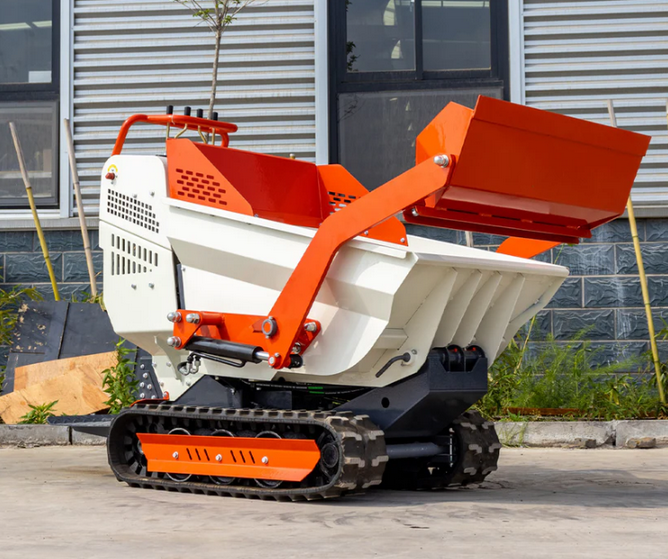
A mini dump truck can make a major difference on compact job sites where space, traction, and speed matter. Whether you are moving soil, gravel, debris, sand, or wet materials, these compact carriers help reduce manual labor and keep projects moving. On the MMS collection page, mini dumpers are positioned for construction, renovation, landscaping, and work on uneven, muddy, sandy, or sloped ground, which makes them especially useful for crews that need stable performance in tighter areas. MMS also describes its machines as compact yet robust, with collection-level load capacities ranging from 700 kg to 2,900 kg, while the currently listed MS5050 model is a smaller tracked unit built for practical day-to-day hauling.
If you are comparing equipment for residential construction, garden projects, hardscaping, or site cleanup, understanding the value of a mini dumper is essential. The right machine can improve productivity, cut fatigue, and help crews work more safely and efficiently in places where larger dumpers are not practical. This guide explains what to look for, where these machines perform best, and how to choose the right model for your workload.
Why a Mini Dumper Is a Practical Choice
Compact hauling equipment is popular because it fills the gap between wheelbarrows and full-size hauling machines. A mini dumper gives operators a more efficient way to transport materials across short distances without needing the footprint or cost of larger site equipment. MMS highlights mini dumpers for construction projects, renovations, and landscaping jobs, especially where terrain creates traction problems for wheeled machines.
That matters because many job sites are not smooth or dry. On small residential developments, backyard landscaping jobs, and narrow access routes, crews often face mud, loose soil, slopes, and soft ground. In those conditions, a compact dumper can keep materials moving while reducing the repeated lifting and pushing that slows down manual work.
A good compact dumper typically helps with:
-
Moving soil, gravel, mulch, and sand
-
Carrying demolition debris
-
Transporting cement or mixed concrete
-
Backfilling trenches
-
Handling materials in gardens, farms, and narrow construction areas
For buyers who want a machine that can support several types of projects instead of one narrow use case, this flexibility is a major advantage.
Why a Tracked Dump Truck Performs Better on Difficult Terrain
One of the strongest reasons to choose a tracked dump truck is traction. MMS specifically markets its mini tracked dumper range for uneven, muddy, sandy, and sloped terrain, noting that these conditions can cause wheeled machines to sink or lose grip. That positioning makes sense for buyers who regularly work in unstable ground conditions.
A tracked dump truck spreads weight across a wider contact area than many wheeled alternatives. In practical terms, that can improve balance and ground contact on soft surfaces. For contractors and landscapers, this means the machine is often better suited to moving loads through backyards, rough plots, partially finished sites, and areas where weather has made the ground unpredictable.
Tracked designs also make compact equipment more versatile in tight work zones. The MS5050 product page lists a minimum turning radius of 1.15 meters, a minimum ground clearance of 100 mm, and a climbing ability of 20 degrees. Those figures suggest a machine intended for maneuverability in smaller, more awkward spaces rather than for long-haul, high-speed transport.
For many buyers, the real benefit is control. A compact tracked carrier is not just about moving loads; it is about keeping materials flowing in places where access is limited and footing is unreliable. That is often the difference between a slow site and a productive one.
Where a Concrete Dumper Adds the Most Value
A concrete dumper is especially useful on projects where wet, heavy material has to be moved accurately and with less mess. MMS notes that its mini dump trucks can be used for construction and landscaping applications ranging from material transport to cement handling. That makes this equipment relevant not only for earthmoving, but also for site prep and finishing work.
A concrete dumper can be valuable on jobs such as:
-
Sidewalk and pathway installation
-
Foundation edge work
-
Small slab pours
-
Garden wall and hardscape projects
-
Moving cement, mortar, or mixed aggregate around restricted sites
On these types of jobs, the main challenge is not always total distance. It is often precision, surface conditions, and time. When crews need to move mixed material repeatedly without overloading laborers, compact dumping equipment can improve workflow significantly.
Hydraulic tipping is another reason this category matters. The MS5050 page lists a hydraulic tipping system with a 100-degree tipping angle, which is useful for unloading material more quickly and with less manual effort. For buyers looking at a concrete dumper, controlled unloading is one of the most important features because it directly affects speed, cleanliness, and placement accuracy.
Key Features to Compare Before You Buy
Not every compact dumper is the same, so comparing specifications matters. MMS presents its overall mini tracked dumper collection as covering payloads from 700 kg to 2,900 kg, while the currently listed MS5050 is rated for a maximum loading weight of 500 kg, or roughly 1100 lbs. That difference is a reminder to buyers: always compare the actual model specs, not only the broader category description.
1. Payload Capacity
The first question is simple: how much do you need to move per cycle? If your work mostly involves mulch, loose soil, debris, or light aggregates, a smaller unit may be enough. If you handle dense material more often, higher payload capacity becomes more important. Overbuying can waste budget, but underbuying can slow the job and increase cycle time.
2. Tipping System
Dumping efficiency matters just as much as carrying capacity. The MS5050 uses hydraulic tipping, which reduces the effort needed to unload. For contractors moving wet material, gravel, or spoil, this is more efficient than relying on awkward manual unloading.
3. Engine and Fuel Details
The listed MMS model is a 6.5HP gasoline unit with a 3.6L fuel tank and 0.6L total engine oil capacity. The collection FAQ also states that MMS mini dump trucks use gasoline. For many buyers, gasoline power can be a practical fit for smaller outdoor jobs because fueling is straightforward and the machine is designed for mobile site work.
4. Mobility and Site Handling
The product page lists a walking speed of 2.88 km/h and a machine weight of 360 kg. Those numbers reinforce the machine’s role as a controlled, compact hauler rather than a fast transport vehicle. Buyers should evaluate whether they need tight maneuvering, slope capability, low ground pressure, or more speed across long work zones.
5. Safety and Ease of Use
MMS describes the dumper as user-friendly and says even untrained personnel can begin operating it after simple instruction. The company also highlights high-strength materials and operator protection features such as a removable hopper protection device. While any machine still requires safe operation and jobsite training, these details indicate an emphasis on practical usability.
6. Support, Shipping, and Ownership Experience
Equipment value is not only about specs. The product page also highlights free U.S. shipping, shipping within seven days, a 1-year warranty, and lifetime technical support. MMS further notes that the unit requires forklift unloading unless the buyer arranges the company’s free unloading service. These details matter because logistics and after-sales support can affect the real ownership experience as much as the machine itself.
How a Mini Dump Truck Improves Productivity
The biggest advantage of a mini dump truck is workflow improvement. Instead of relying on repeated hand-carrying or wheelbarrow trips, crews can move larger loads in a more organized way. This reduces physical strain, shortens transport time, and helps workers spend more time on higher-value tasks like grading, installation, or finishing.
For small contractors, that productivity gain can have a direct effect on profitability. Faster hauling means fewer delays between steps. Landscapers can shift bulk material more quickly. Renovation crews can remove debris with less disruption. Concrete teams can deliver material closer to the pour area without relying entirely on manual movement. In short, a compact dumper supports better pace and better labor use.
Buying vs. Renting: Which Makes More Sense?
MMS addresses this question directly in its collection FAQ. The company says owning a small dumper is the better choice if you have long-term needs or when ownership is more cost-effective than renting, while renting may make more sense if you only need the machine once or twice. That is a practical framework for most buyers.
Buying is usually the stronger choice when:
-
You run ongoing landscaping or site-prep jobs
-
You regularly move aggregates, soil, or debris
-
You want predictable equipment access
-
You want to avoid repeated rental scheduling and delivery costs
Renting may be more sensible when:
-
The machine is only needed for one project
-
You are testing whether compact dumpers fit your workflow
-
Storage and maintenance are concerns
-
Your budget favors short-term access over ownership
For many growing contractors, ownership becomes more attractive once the equipment starts solving a recurring labor bottleneck.
How to Choose the Right Model for Your Work
Choosing the best machine starts with your typical materials and jobsite conditions. A mini dumper that is ideal for mulch and soil may not be the best match for dense aggregate or repeated concrete transport. Likewise, a model that excels on narrow backyard access routes may not be the best option for larger commercial jobs with higher daily volume.
Ask yourself these questions before buying:
-
What material do I move most often?
-
How heavy is a normal load?
-
Is my ground usually soft, sloped, or muddy?
-
Do I need hydraulic tipping?
-
How narrow are my access points?
-
Will I use the machine weekly, seasonally, or only occasionally?
If your work frequently involves unstable terrain, a tracked dump truck is usually the more logical choice than a wheeled alternative. If unloading speed matters, prioritize a hydraulic tipping system. If your projects are mainly residential and space is tight, compact dimensions and turning radius should stay high on your checklist.
Basic Maintenance and Safe Operation Tips
MMS states that with proper care and maintenance, its small dumpers can last at least 10 years. That claim makes routine upkeep especially important for buyers who want strong long-term value.
To keep performance consistent:
-
Check fuel and oil before operation
-
Inspect tracks and undercarriage regularly
-
Keep the hopper clean after heavy or wet loads
-
Watch hydraulic performance and tipping response
-
Avoid exceeding rated capacity
-
Train operators on safe loading, travel, and dumping routines
It is also smart to plan for unloading and delivery requirements before purchase. MMS notes that the machine requires forklift unloading unless you arrange free unloading assistance, so site readiness should be part of your buying plan.
FAQ
1. What is the difference between a mini dumper and a full-size dump truck?
A mini dumper is built for compact areas, smaller loads, and tighter jobsite access. It is better suited to landscaping, renovation, and residential construction where a full-size truck may be too large or impractical.
2. Is a tracked dump truck good for muddy ground?
Yes. MMS specifically markets its mini tracked dumper range for uneven, muddy, sandy, and sloped terrain where wheeled machines may lose traction or sink.
3. Can a concrete dumper be used for landscaping too?
Yes. MMS says its mini dump trucks can be used for construction and landscaping applications, including material transport and cement handling. That means a concrete dumper can also be useful for hardscaping, garden paths, retaining walls, and similar outdoor projects.
4. What are the main MS5050 specifications?
The currently listed MS5050 is a 6.5HP gasoline model with a 500 kg maximum loading weight, hydraulic tipping, a 100-degree tipping angle, 20-degree climbing ability, 360 kg machine weight, and a 3.6L fuel tank.
5. Does MMS offer support after purchase?
According to the product page, MMS offers free U.S. shipping, a 1-year warranty, and lifetime technical support for the listed unit.
Conclusion
A mini dump truck is one of the most practical equipment choices for crews that need compact, reliable material handling on smaller or more difficult job sites. It helps reduce manual labor, improves workflow, and performs well in places where larger equipment is inefficient. MMS positions its mini dumper range for construction, landscaping, renovations, and soft or sloped ground, while the current MS5050 listing shows how a compact tracked model can combine hydraulic tipping, manageable payload, and jobsite-friendly mobility. If your work regularly involves hauling soil, gravel, debris, or wet material, a compact tracked dumper can be a smart long-term investment in productivity and operator efficiency.