
Recently, a Roll strategy, seemingly more about luck than effort, has rapidly spread within Monopoly Go player community.
This strategy claims that by controlling the rhythm of specific multiplier changes and the number of rolls, the probability of landing on a rail or chance tile can be significantly increased. Certain players go so far as to assert that, in optimal circumstances, this method can produce a sustained sequence of high-frequency reward triggers across several laps.
This claim has spread rapidly among players, especially those with limited resources and looking to optimize Dice usage efficiency during the recent The Simpsons Album collaboration, sparking numerous trials and discussions.
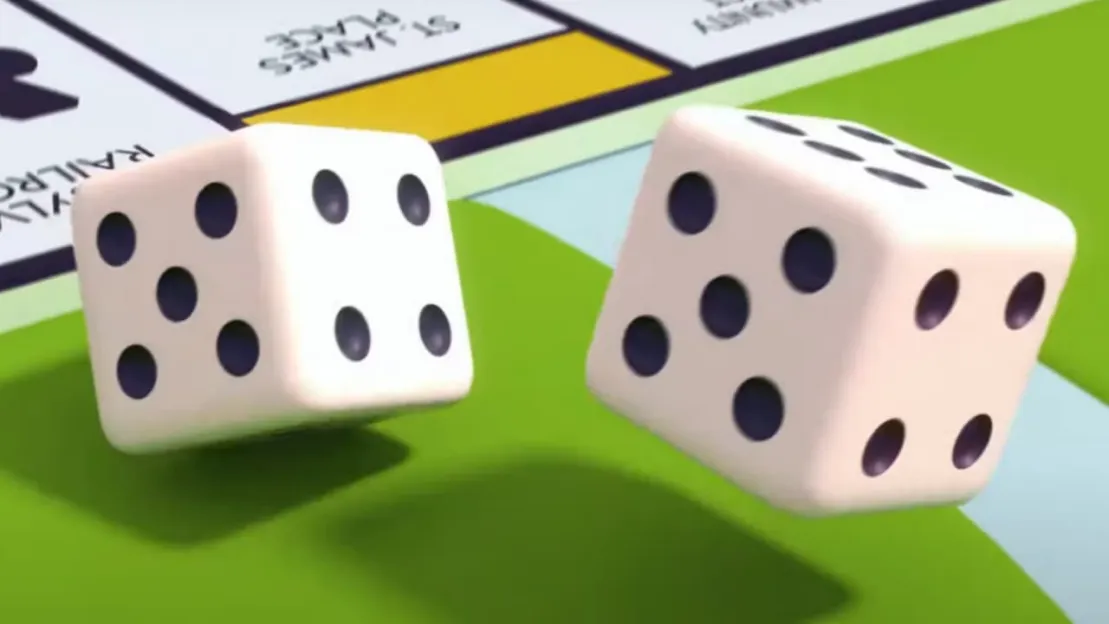
According to IGGM’s compilation of relevant community feedback and player discussions, opinions on this strategy are clearly polarized: some players firmly believe in its effectiveness, while others believe it’s merely an illusion caused by probability fluctuations.
Roll Strategy
In this version compiled by IGGM, the strategy typically follows a relatively fixed logical loop:
Players start with a multiplier of x1, and each 4 rolls constitute an observation period;
If a rail or chance tile is hit within the period, the multiplier is increased;
If not, the loop restarts from x1.
Some more advanced analyses even skip intermediate multipliers, going directly to x20, x50, or even higher multipliers, arguing that the hit rate is more pronounced at higher multipliers.
Furthermore, a widely cited observation is that the hit probability seems to increase significantly when a piece is about 5 to 7 moves from the target square, thus prompting players to increase their betting multiplier in this range.
These empirical descriptions constitute the core narrative of this strategy.
The Probability Structure Remains Unchanged
Mechanically, Monopoly Go board typically consists of about 40 squares, with railways, Chances, and other key functional squares occupying about 11.
This means that the probability of a single roll landing on the target square is already quite high, and with multiple consecutive rolls, the probability of hitting the target square naturally accumulates.
Within a four-roll window, the probability of hitting at least one key square is already over 70%.
Even during active collaboration periods such as The Simpsons Album, the underlying mechanics remain statistically stable.
Therefore, IGGM believes that the “reset multiplier after four misses” logic essentially only utilizes a repetitive waiting process of a naturally high-probability event, without altering any underlying probability structure.
5-7 Step Distance Perception
The claim that strategies are more likely to hit within 5 to 7 steps is not mysterious from the perspective of Dice distribution.
The sum of the points of two Dice shows a clear midpoint peak, with 7 appearing most frequently, followed by 6 and 8.
This means that 5 to 7 steps is one of the most common landing ranges in Monopoly Go Dice movement, so when the target square is within this range, the hit experience is naturally more frequent.
This phenomenon is not because of system bias, but a natural result of Dice probability distribution. During event-driven play periods such as The Simpsons Album, this perception is often reinforced by increased play frequency.
Cognitive Bias Leading to Illusions
In numerous player feedback reports, a simple phenomenon is that:
Successful experiences are more easily remembered, while failures are often ignored.
This information filtering mechanism gradually reinforces the subjective impression that the “strategy is effective,” which is a typical confirmation bias.
Furthermore, when players experience consecutive hits within a short period, they easily attribute this random fluctuation to their own operational rhythm rather than the natural fluctuations of probability itself.
While “consecutive top hits in multiple rounds” are not uncommon in large-scale samples, they are highly impactful in individual experiences, further reinforcing the credibility of the strategy.
RNG Mechanism and System Reality
From a game design perspective, Monopoly Go Dice results are generated by a server-side random number system.
Under this mechanism, player multiplier switching or operational rhythm does not affect the logic of random result generation.
Any attempt to influence the result through operational patterns must confront the fundamental fact that random number generation is designed to be independent of client behavior.
In various strategy discussions and version changes surrounding Monopoly Go, players often focus not only on individual gameplay mechanics but also on overall resource planning, event rhythm, and efficiency optimization methods at different stages.
From IGGM’s perspective, this strategy relies entirely on the behavior of the random number generator itself. Without verifiable mechanisms, it’s difficult to consistently deliver predictable rewards when the number of dice is limited. Therefore, we recommends you to buy Monopoly Go dice without ban risk from IGGM.com to more directly address resource consumption pressures during event cycles.

It is against this backdrop that the service advantages offered by IGGM become more apparent.
It not only ensures the stability of resource acquisition but also allows players to replenish resources faster through high delivery efficiency and a relatively smooth user experience, thereby reducing waiting time and allowing for more focused engagement in the core gameplay loop.
Regarding Restart Methods
A more elaborate variant of the strategy holds that when the reward wheel repeatedly lands on the same outcome, force-closing and relaunching the app can reset those results.
From a technical perspective, this experience is more likely because of re-triggering an independent random draw, rather than changing the probability distribution.
Since each draw is an independent event, restarting does not increase the long-term probability of a specific reward.
This phenomenon is better understood as a perceptual discrepancy that arises from re-examining short-term random variations.
A Rational Perspective
As a commercially operated game, Monopoly Go’s economic system and reward mechanism are essentially designed around resource consumption and long-term retention.
Based on player discussions compiled by IGGM, this strategy appears to be more of a narrative built on probability fluctuations, selective memory, and experiential attribution, rather than a genuinely reproducible mechanic flaw.
When players search for patterns in high-frequency random systems, the brain often automatically fills in the gaps in “causal relationships,” even if these relationships don’t statistically exist.
The reason this strategy seems effective isn’t because it alters the game mechanics, but because it is superimposed on a highly volatile probability system.
When randomness is sufficiently complex, people are more likely to misinterpret natural fluctuations as controllable techniques.
Ultimately, even during events such as The Simpsons Album, understanding this is more important than any Dice strategy.